

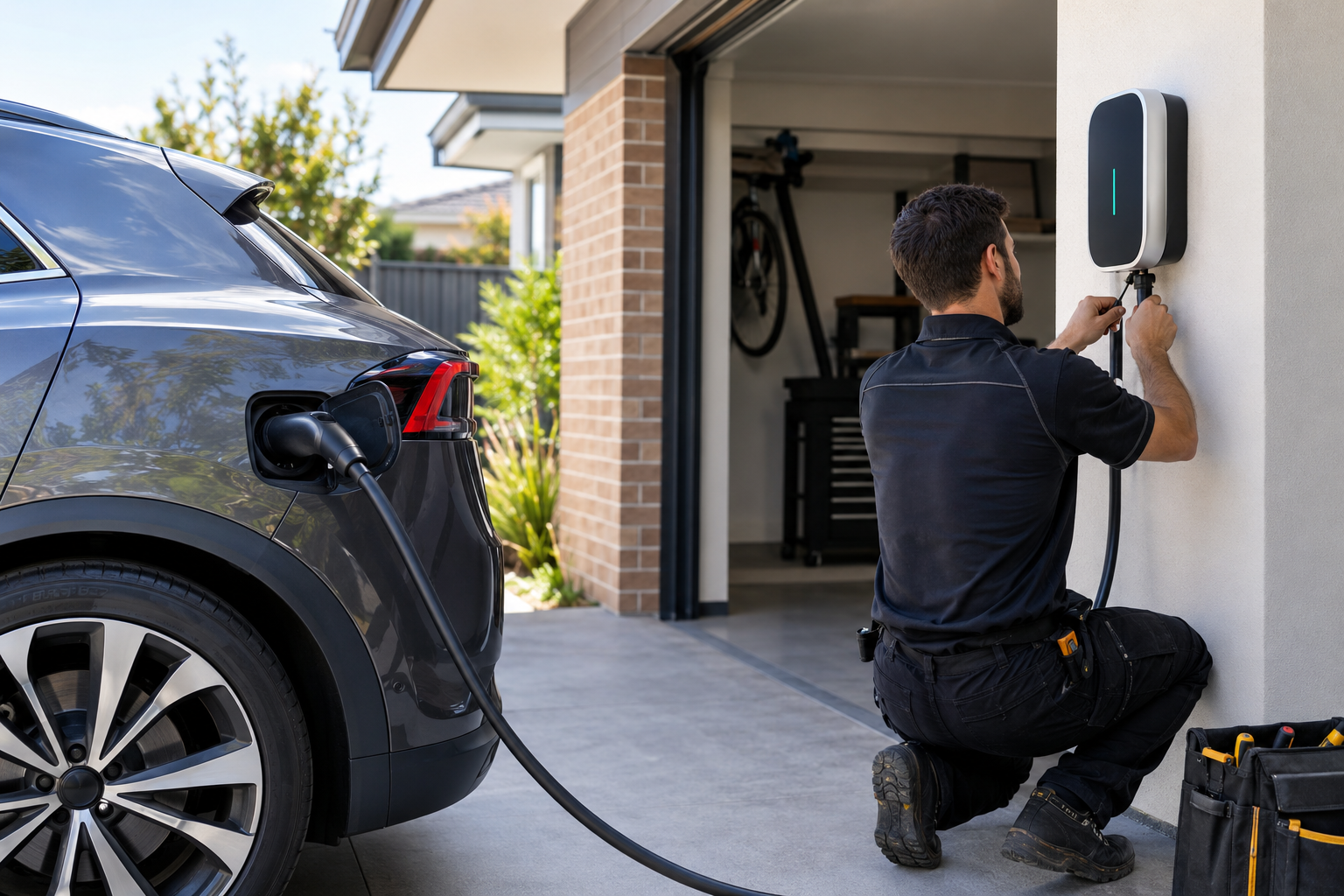
Electric vehicles are becoming a practical choice for many Australian drivers. They can help reduce fuel expenses and offer a convenient way to charge at home instead of relying entirely on public charging stations. However, before purchasing a home charger, it is worth understanding what your property needs, how installation works, and whether your existing electrical system can support the extra demand.
For homeowners and businesses across Western Sydney, planning an ev charger installation in western sydney starts with choosing the right charging equipment and making sure it can be installed safely. A qualified electrician can assess your property, explain your options, and help you make an informed decision.
Why Consider Installing an EV Charger at Home?
Charging at home can make owning an electric vehicle much easier. Instead of planning trips around public charging stations, you can plug your vehicle in when you arrive home and charge it according to your needs.
A dedicated home charger can also provide faster charging than a standard household power outlet, depending on the charger, your vehicle, and your electrical supply. This can be especially useful for drivers who travel regularly for work or have limited time between trips.
Home charging also offers flexibility. You can choose when to charge, monitor your energy use, and explore available electricity plans that may offer lower rates during off peak periods.
The right setup depends on your driving habits, vehicle requirements, property layout, and budget. Taking time to assess these factors before installation can help you avoid unnecessary expenses.
Can Your Existing Electrical System Support an EV Charger?
One of the most important questions to consider is whether your current electrical system can handle the additional load.
An EV charger draws a substantial amount of electricity while operating. If your home already uses several high demand appliances, such as air conditioning, electric cooking equipment, or an electric hot water system, the available electrical capacity may need to be assessed before installation.
A qualified electrician can inspect your switchboard, electrical circuits, and incoming supply to determine whether the proposed charger is suitable.
In some properties, the existing electrical installation may be adequate. In others, a dedicated circuit, switchboard upgrade, or load management system may be required.
It is better to identify these requirements before purchasing equipment rather than discovering them halfway through the installation.
Which EV Charger Is Right for Your Property?
Not every electric vehicle owner needs the same charging setup. Choosing a charger should depend on how you use your vehicle and what your property can accommodate.
Standard Household Power Outlet
Some electric vehicles can be charged using a compatible portable charging cable connected to a suitable household outlet. This may be convenient for occasional charging, but charging speeds are generally slower than those of a dedicated home charging unit.
The outlet and circuit must be suitable for the intended load. Regular high demand charging should not be assumed safe simply because a standard outlet is available.
Dedicated Home EV Charger
A dedicated AC charger is a popular option for drivers who regularly charge at home. It can provide a more convenient charging experience and may deliver higher charging speeds, depending on the vehicle and electrical supply.
Chargers are available with different power ratings, cable arrangements, and smart charging features. An electrician can help determine which option suits your daily driving requirements.
Smart EV Charging
Some chargers offer features that allow users to schedule charging, monitor electricity consumption, or manage charging alongside other household loads.
These features may help you make better use of your electricity plan and manage the demand placed on your electrical system. However, savings depend on your tariff, charging habits, and the equipment installed.
What Happens During EV Charger Installation?
Understanding the installation process can help you prepare your property and know what to expect.
The first step is an assessment of your electrical system and the proposed charger location. The electrician considers the switchboard, available capacity, cable route, parking arrangements, and the manufacturer’s installation requirements.
Next, the appropriate charger and installation method are selected. The electrician determines whether additional electrical work is necessary and explains any relevant costs before proceeding.
During installation, the charger is connected to a suitable dedicated circuit with the required protective devices. The installation must comply with applicable Australian electrical safety requirements and manufacturer instructions.
After the work is completed, the electrician carries out the necessary inspections and testing. You should also receive guidance on operating the charger and understanding its main features.
The complexity and duration of the work depend on the property. A straightforward installation may require less work than one involving a long cable route, a difficult mounting location, or switchboard improvements.
How Much Does EV Charger Installation Cost?
The cost of ev charger installation in western sydney varies from one property to another. There is no single price that applies to every home or business.
Several factors can influence the total cost, including:
- The brand, model, and power rating of the charger.
- The distance between the switchboard and the charging location.
- The amount of electrical cabling and installation work required.
- Whether the switchboard needs an upgrade.
- Whether additional safety equipment or load management is needed.
- The accessibility of the installation area.
For example, installing a charger close to a suitable switchboard may involve less labour and cabling than installing one in a detached garage some distance from the house.
When comparing quotes, check whether the price includes the charger, installation labour, electrical protection, testing, and any required upgrades. A clear, itemised quote makes it easier to compare options and understand what you are paying for.
Do You Need a Switchboard Upgrade Before Installation?
Not necessarily. Some properties already have a suitable switchboard and enough electrical capacity for a home charger.
However, older switchboards or systems with limited capacity may require improvements before a charger can be installed safely. The need for an upgrade depends on the condition of the existing equipment, the available supply, the proposed charger, and the property’s overall electrical demand.
In certain cases, a load management system may help control how much electricity the charger draws when other appliances are operating. Whether this is appropriate depends on the equipment and the results of the electrical assessment.
An inspection can help identify the most practical option rather than assuming that every property needs a complete switchboard replacement.
Why Choose a Qualified Electrician in Western Sydney?
EV charging equipment must be installed correctly because it can draw high electrical loads for extended periods. Poor installation can create risks such as overheating, electrical faults, and equipment damage.
Professional ev charger installation services help ensure the charger, circuit protection, wiring, and electrical supply are suitable for the intended use.
When choosing an electrician, look for appropriate licensing, relevant installation experience, clear pricing, and a willingness to explain the work involved. Ask whether the proposed installation will be tested and completed in accordance with applicable Australian standards and local requirements.
For properties across Western Sydney, working with an electrician familiar with residential and commercial electrical systems can also help identify practical installation options.
Frequently Asked Questions
1. How long does EV charger installation take?
The time required depends on the property, charger location, cable route, and whether electrical upgrades are necessary. A straightforward installation may be completed in a few hours, while more complex work can take longer. Your electrician can provide a more accurate estimate after assessing the site.
2. Can I install an EV charger in my garage?
Yes, a garage is a common location for a home EV charger. The final position depends on the vehicle’s parking location, cable reach, mounting requirements, and electrical access. The charger must also be suitable for the conditions where it will be installed.
3. Is a dedicated circuit required for a home EV charger?
A dedicated circuit is generally used for a fixed home EV charging unit. The electrician will determine the appropriate circuit arrangement, wiring capacity, and protective devices based on the charger’s specifications and applicable electrical requirements.
4. Will I need to upgrade my switchboard?
Not always. An electrician can assess whether your existing switchboard and electrical supply can accommodate the charger. An upgrade may be recommended if the equipment is unsuitable, the capacity is insufficient, or additional protection is required.
5. Can I charge my electric vehicle overnight?
Yes, many owners charge their vehicles overnight. A suitable charger may allow you to schedule charging during preferred hours. Check your electricity plan and vehicle settings to understand whether off peak charging could reduce your energy costs.
6. Can I install an EV charger at a commercial property?
Yes, commercial EV charging may be suitable for workplaces, business premises, and other locations with appropriate parking facilities. The installation requirements depend on electrical capacity, expected vehicle use, access arrangements, and whether multiple charging points are planned.
7. Is home EV charging cheaper than using public charging stations?
Home charging can be less expensive in some circumstances, particularly when electricity is purchased at a lower off peak rate. However, the actual cost depends on your electricity tariff, vehicle efficiency, charging losses, and the prices charged by public networks.
8. How do I arrange EV charger installation in Western Sydney?
Start by choosing your vehicle’s charging requirements and identifying a suitable parking location. Then arrange an assessment with a qualified electrician. They can check your electrical system, discuss suitable chargers, explain any required upgrades, and provide a quote for the work.
Arrange Your EV Charger Installation with Gotham Electrical
Installing a home EV charger is easier when you understand your property’s electrical requirements before work begins. Choosing suitable equipment, checking your switchboard, and planning the charging location can help you achieve a practical and reliable setup.
Gotham Electrical provides electrical services for customers seeking professional ev charger installation in western sydney. If you are considering a charger for your home or business, contact Gotham Electrical to discuss your requirements, arrange an assessment, and explore suitable ev charger installation services for your property.