

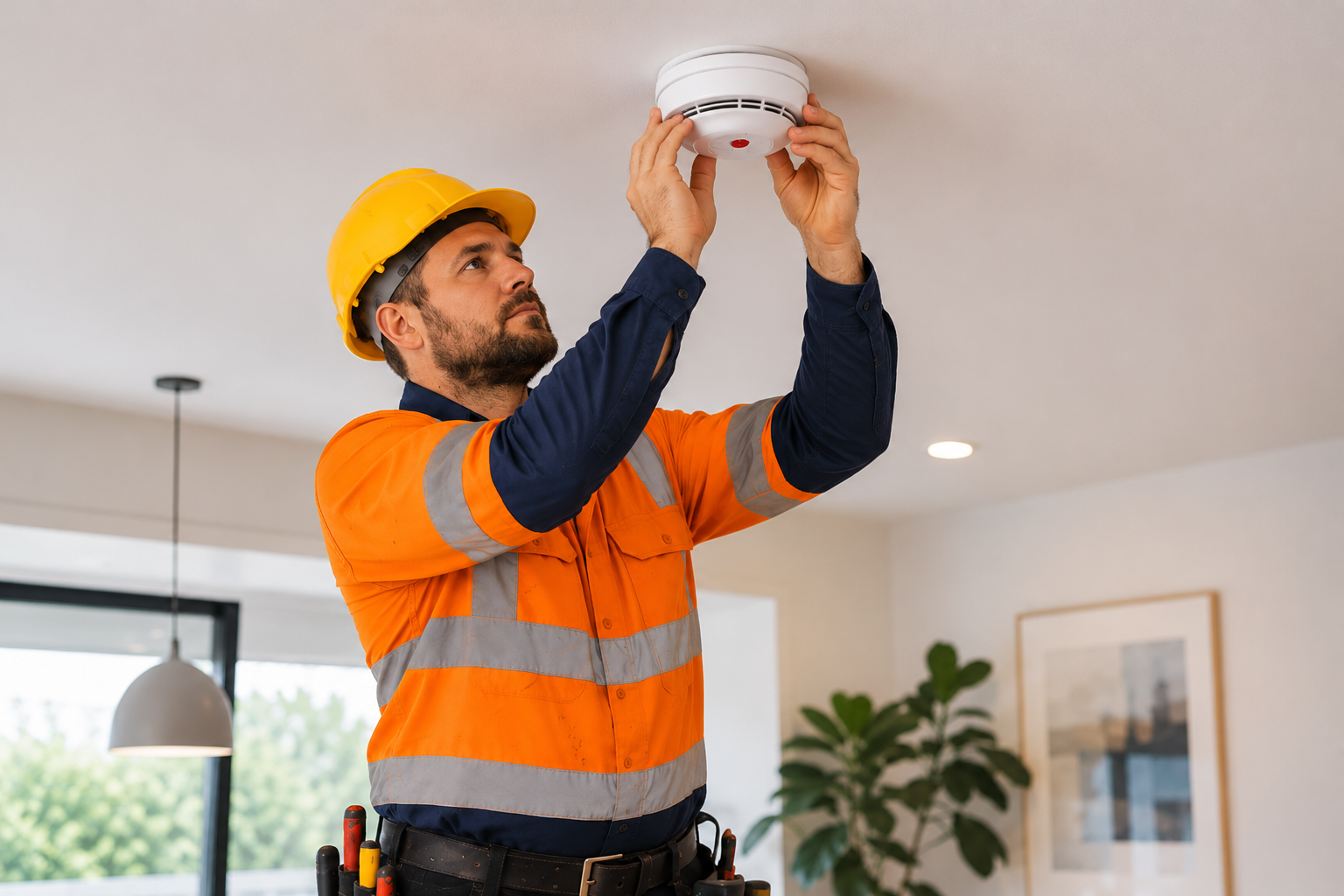
A smoke alarm can be working perfectly in one room while someone sleeping at the other end of the house remains unaware of a potential fire. This is a concern many homeowners overlook when checking their property’s fire safety arrangements.
Having a smoke alarm installed is important, but its position and ability to alert people throughout the home also matter. A single alarm may not provide the same level of warning as a properly planned system with multiple interconnected alarms.
For homeowners across Western Sydney, reviewing the location and condition of existing smoke alarms is a practical step towards improving household fire safety. If you are unsure whether your current alarms provide adequate coverage, professional smoke alarm installation can help you identify what your property needs.
Why Is One Smoke Alarm Not Always Enough?
The size and layout of a property influence how effectively a smoke alarm can alert everyone inside.
Consider a two storey home with bedrooms upstairs and a living area downstairs. If a fire starts near the kitchen, an alarm located only in a distant hallway may not provide the same warning throughout the property.
Closed doors, walls and the distance between rooms can also affect how clearly an alarm is heard. This is why the number and placement of smoke alarms deserve attention. NSW legislation requires at least one working smoke alarm on every level of a home, with additional placement requirements around bedrooms.
Fire and Rescue NSW also recommends installing alarms in bedrooms and living areas for additional protection. Rather than checking only whether an alarm is present, homeowners should consider whether the entire household can receive an early warning.
How Do Interconnected Smoke Alarms Work?
Interconnected smoke alarms are designed to communicate with one another. When one alarm detects smoke, the connected alarms also sound.
This means that if smoke is detected in one part of the house, people in other rooms and on different levels can receive the warning.
For example, imagine a family sleeping upstairs while smoke develops in the downstairs living area. With an interconnected system, the alarm detecting smoke can activate the other connected alarms, helping alert people who may otherwise not hear the original warning.
Interconnection can be achieved through suitable wired or wireless systems, depending on the equipment and property requirements. When considering smoke alarm installation in Western Sydney, it is worth discussing whether an interconnected arrangement is suitable for your home.
Where Should Smoke Alarms Be Installed?
The position of a smoke alarm affects how effectively it can detect smoke and alert occupants. Installing an alarm in an unsuitable location may affect its performance or lead to unwanted activations.Fire and Rescue NSW provides guidance on smoke alarm placement, including the following areas.
1. Hallways Near Bedrooms
Smoke alarms should be positioned in hallways associated with bedrooms. If bedrooms are located in separate parts of the property, the required placement needs to account for those different areas.This is particularly important because people may be asleep when a fire starts.
2. Every Level of the Home
A smoke alarm is required on every level of a residential property, including levels without bedrooms. For a multi storey home, this means checking both upstairs and downstairs rather than assuming that one alarm provides coverage for the entire building.
3. Bedrooms and Living Areas
Fire and Rescue NSW recommends additional smoke alarms in bedrooms and living areas. These locations can provide earlier warnings in areas where household members spend considerable time.
4. Suitable Ceiling Positions
Smoke alarms are generally installed on or near the ceiling in accordance with the manufacturer’s instructions.Their exact position should take into account the room layout and nearby features that could affect smoke movement.
Kitchens and bathrooms require particular consideration because steam and cooking activities may contribute to unwanted alarms. A qualified electrician can help determine appropriate locations for a suitable installation.
Are Your Existing Smoke Alarms Too Old?
Smoke alarms do not last indefinitely. Even if an alarm looks clean and appears to be working, its sensing components have a limited service life. Fire and Rescue NSW advises that smoke alarms should be replaced within 10 years of manufacture, or earlier if the manufacturer specifies a shorter period. If you cannot remember when your alarms were installed, check the manufacturing date and replacement information on the unit.
Other warning signs that deserve attention include:
- Repeated low battery warnings.
- An alarm that does not respond during testing.
- Physical damage to the alarm casing.
- Unusual or repeated false activations.
- An alarm that has reached its recommended replacement date.
Do not assume that replacing the battery will resolve every problem. An ageing or faulty unit may need complete replacement. Arranging professional smoke alarm replacement can help ensure the new equipment is suitable for the property’s requirements.
Should You Choose Hardwired or Battery Operated Smoke Alarms?
Homeowners often have questions about the difference between hardwired and battery operated smoke alarms.
Both types can be suitable when they meet the applicable requirements for the property.
Hardwired Smoke Alarms
These alarms connect to the property’s mains electrical supply and generally include battery backup. They can also be connected with other compatible alarms to create an interconnected system.
Hardwired installation involves electrical wiring work and must be carried out by an appropriately licensed electrician.
Battery Operated Smoke Alarms
These alarms operate using batteries rather than a direct mains connection. Some models include long life lithium batteries designed to last for the service life of the alarm. The appropriate option depends on the building, existing electrical installation and applicable requirements.
Fire and Rescue NSW recommends hardwired and interconnected alarms wherever possible. Where mains powered installation is not suitable, it recommends alarms with long life batteries. Before purchasing replacement equipment, check that it complies with Australian Standard AS 3786 and is suitable for your property.
What Should Landlords and Property Owners Check?
Smoke alarm responsibilities are particularly important for people who own or manage rental properties.In NSW, landlords and agents must ensure that rented properties have working smoke alarms on every level.
They are also responsible for checking smoke alarms every year and ensuring that alarms are replaced within the required timeframe.If an alarm is not working, including when its battery needs replacement, the landlord or agent must arrange the necessary repair within two business days. Tenants should notify their landlord or property manager if they discover that an alarm is not working.
For property owners across Western Sydney, arranging regular checks and professional smoke alarm installation services can help address problems before they are overlooked.It is also important to keep records of inspections, repairs and replacements.
Why Should You Use a Licensed Electrician for Smoke Alarm Installation?
Installing a smoke alarm involves more than attaching a device to the ceiling. The electrician needs to consider the property layout, electrical connections, alarm compatibility and the appropriate locations for installation.
This is particularly relevant when upgrading an existing system or adding interconnected alarms. Professional installation can help with:
- Assessing the existing smoke alarm arrangement.
- Identifying areas that may need additional coverage.
- Selecting suitable compliant smoke alarm equipment.
- Installing hardwired alarms where required.
- Connecting compatible interconnected units.
- Testing the installed equipment.
- Explaining basic testing and maintenance requirements.
Gotham Electrical provides smoke alarm installation services for customers across Western Sydney. If you are planning a new installation or need to replace older alarms, visit the Smoke Alarm Installation service page to discuss your requirements.
Frequently Asked Questions
1. How many smoke alarms does my home need in NSW?
NSW legislation requires at least one working smoke alarm on every level of a home, with additional placement requirements around bedrooms. Fire and Rescue NSW recommends installing alarms in bedrooms and living areas as additional protection.
2. What is the benefit of interconnected smoke alarms?
Interconnected smoke alarms activate together when one connected unit detects smoke. This helps alert people in other parts of the property, rather than relying only on the alarm closest to the fire.
3. How often should smoke alarms be replaced?
Smoke alarms should generally be replaced within 10 years of manufacture, or earlier if specified by the manufacturer. Always check the replacement information provided with the equipment.
4. Are hardwired smoke alarms better than battery operated alarms?
Both can meet applicable requirements when correctly selected and installed. Fire and Rescue NSW recommends hardwired and interconnected alarms wherever possible. The most suitable option depends on the property and its electrical setup.
5. Can I install a hardwired smoke alarm myself?
Hardwired smoke alarms involve electrical wiring work, which must be completed by an appropriately licensed electrician in NSW. Installation must also follow the manufacturer’s instructions.
6. Where should smoke alarms be installed in a two storey home?
At least one working smoke alarm is required on every level. Additional placement is required in hallways associated with bedrooms, and Fire and Rescue NSW recommends alarms in bedrooms and living areas.
7. How do I arrange smoke alarm installation in Western Sydney?
You can contact Gotham Electrical to discuss your property’s requirements, existing alarm system and installation needs. A suitable installation can then be planned according to the property layout and applicable safety requirements.
Make Sure Your Smoke Alarms Can Alert Your Household
A smoke alarm should do more than simply sit on the ceiling. Its location, condition and connection with other alarms all influence how effectively it can warn people throughout the property.
If your home has an older alarm system, missing alarms or limited coverage between different rooms, it may be time to review the installation.
For homeowners and property owners across Western Sydney, Gotham Electrical provides professional smoke alarm installation services to help address residential electrical safety requirements.
Visit the Smoke Alarm Installation service page to learn more and discuss your installation needs.